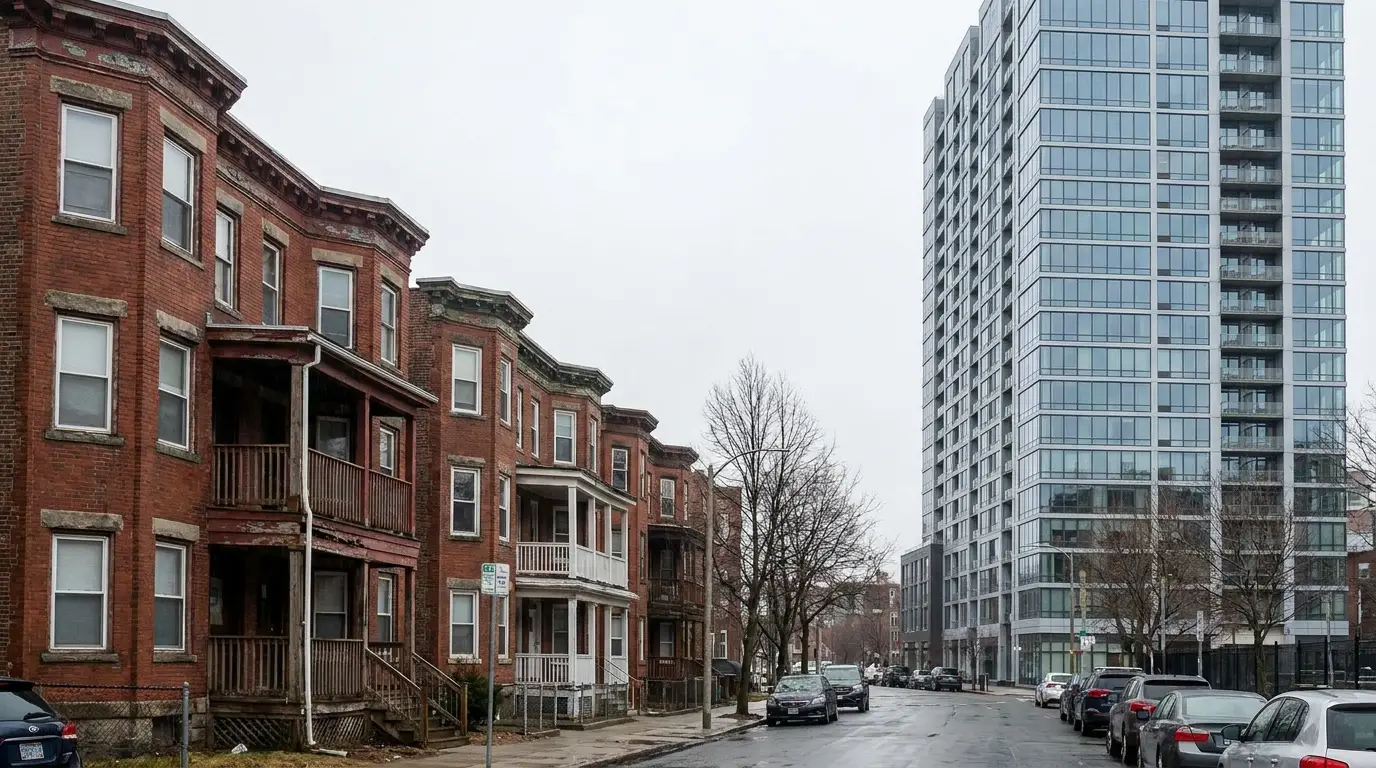
For the first time in this cycle, Boston apartment cap rates are trading below the 10-year Treasury yield. This "negative spread" — where risk-free government bonds yield more than leveraged real estate — is a signal that institutional capital is pricing Boston apartments for appreciation, not current income. For individual investors and small operators, this creates both a challenge and an opportunity.
What Cap Rate Compression Actually Means
When cap rates compress, the same net operating income buys less property — or equivalently, the same property commands a higher price. A building generating $100,000 NOI that sold at a 5% cap in 2023 ($2M) now sells at a 4.1% cap ($2.44M). If you own Boston multifamily, your equity has grown significantly. If you are trying to buy into Boston multifamily, the math is very difficult to make work with current financing costs.
Where Capital Is Rotating
Regional real estate brokers are reporting a notable increase in Boston equity being 1031-exchanged into Western Massachusetts and Southeastern Massachusetts markets. Springfield (7.2% avg cap), New Bedford (6.8%), and Brockton (6.5%) are absorbing capital that cannot pencil in Boston. These markets also offer substantially stronger rent growth on a percentage basis, creating dual tailwinds of income and appreciation.
- If you own Boston multifamily acquired before 2022, your equity position may be substantial. Consider a 1031 exchange into higher-yielding secondary markets to dramatically improve cash flow.
- New construction at today's cap rates in Boston is essentially impossible to underwrite. Stick to value-add acquisitions of existing stock where basis is lower.
- Debt service coverage ratios matter more than ever. Underwrite at today's rates (not the rates of 2021) and stress-test for 50bps of additional compression.
- Small operators have advantages institutional buyers do not: willingness to self-manage, access to off-market deals, and speed of execution. Leverage these.
Source: CoStar Boston Multifamily Q2 2026 Report. Federal Reserve H.15 Selected Interest Rates (June 2026). RentCast Market Analytics.